Category: Philosophy

Timelines and Cultural practices: Baghor Stones

Lets start somewhere. 11,000 years ago. The Ice Age has long gone, humans have started hunting and gathering in groups. We have not yet invented agriculture. To the West, the first stone walls of Jericho are being stacked, and in Turkey, the hunters of Göbekli Tepe are carving massive predatory totems (Schmidt, 2000).

In the subcontinent, things are interesting. On the Ganga Plains (modern-day UP) live the Titans of Sarai Nahar Rai. These are robust hunter-gatherers, some standing over six feet tall, who are already honoring their dead with red ochre and ritual burials — perhaps the first hints of an ancestor cult (Kennedy et al., 1986; Misra, 2001).

Along the “Teri” (red sand dunes) of coastal Tamil Nadu, specifically around Tuticorin, a specialized culture is grappling with a planet in flux. As the glaciers melt, sea levels rise, swallowing the land bridge that once connected India to Sri Lanka. These foragers don’t retreat.

At the center of the subcontinent, something different is happening. At Bhimbetka, rock art is transitioning from simple linear figures into complex depictions of communal dance and mythical animals (Mathpal, 1984). This is the birth of visual vocabulary and expressive creativity, especially in the subcontinent.

It is 1982. G.R. Sharma and J.D. Clark, leading a joint Indo-American team with J.M. Kenoyer and J.N. Pal, stand over a site known as Baghor 1, on the banks of the Son River Valley. Near Medhauli Village, Sidhi District, Madhya Pradesh.

They are looking for upper palaeolithic tools and instruments. They find something else that changes the entire understanding of religion, practices and culture.

They uncover a circular platform of sandstone rubble, about 85 cm across. At its dead center sits a single, natural triangular stone — hand-sized, just 15 cm tall. It’s vibrant, with concentric rings of yellow and ochre laid down by millions of years of geology, the surface itself daubed with pigment by human hands (Kenoyer et al., 1983).

The stone is a natural, laminated ferruginous triangle. Found in a Late Upper Paleolithic context, it is carbon-dated to ~9,000–8,000 BCE. The stone has probably been dug up and selected. It hasn’t been carved.

The structure looks like a place where a ceremony or worship has taken place. The stone at the center, complex in structure. When some tribesmen walk into the excavation, they see two excited archaeologists losing their minds over their discovery. The tribesmen belong to the Kol and Baiga tribes of Madhya Pradesh, one of the oldest tribes of the subcontinent.
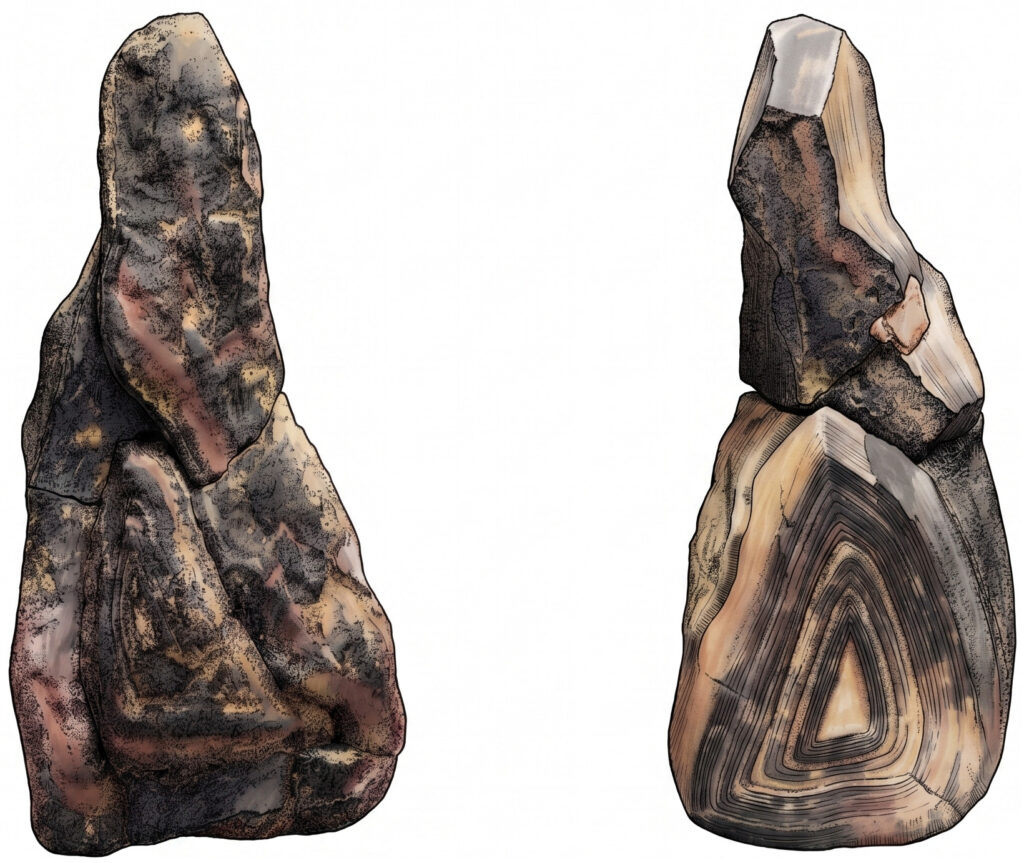
They look at the artifact on the platform and are perplexed why everyone is so excited. The artifact is simply a khari, the Mother or Shakti. They still worship in that valley today, in that exact form (Kenoyer et al., 1983).

The Vedic religious tradition has roots in the Indo-Iranian language family and arrives in the subcontinent much later (Bryant, 2001). Between the Baghor site and the spread of Vedic religion, there is a 7,500-year gap. Let that sink in. Organized, named religion isn’t as old as this gap. The Indus Valley Civilization and Mesopotamia come 5,000 years later. Organized religion forms much later. This is at a time we do not even know how to write.
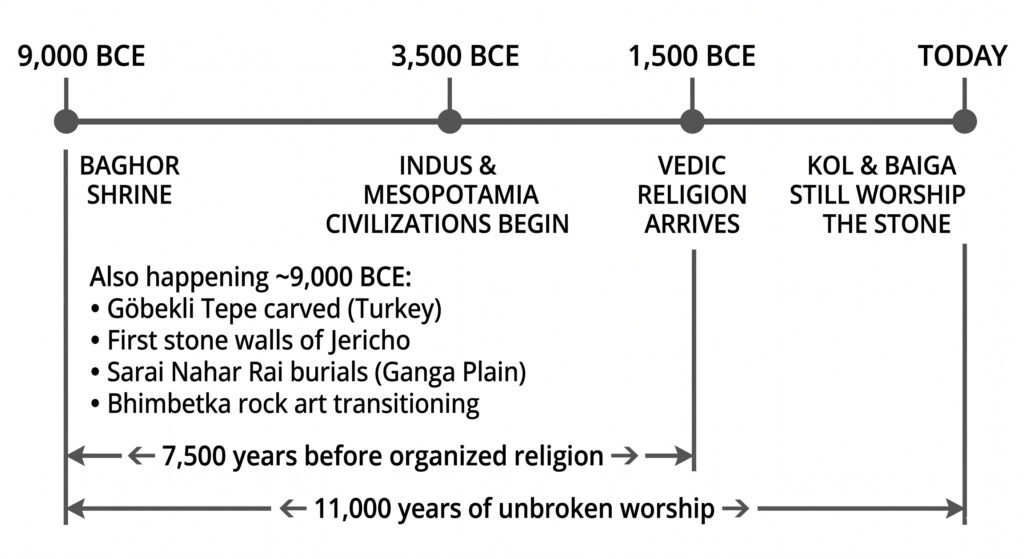
So what we can derive from this is that the earliest known form of worship in India centered on the mother or the female. Other parts of the world had ritualistic practices with different motifs — the predator totems of Göbekli Tepe in current-day Turkey, for instance.

Religion later coerced or adopted the culture of the land. That is how the practice has survived this long without written knowledge.

━━━━━━━━━━━━━━━━━━━━━━━━━━━━━━━━━━━━━━━━━━━━━━━━━━━━━━━━━━━━━━━━━
   YEARS AGO     EVENT
━━━━━━━━━━━━━━━━━━━━━━━━━━━━━━━━━━━━━━━━━━━━━━━━━━━━━━━━━━━━━━━━━
                │
    300,000 ────┤  Modern humans emerge in Africa
                ┊
                ┊   ~230,000 years of foraging
                ┊
     70,000 ────┤  Modern humans reach South Asia
                ┊
                ┊   ~30,000 years of dispersal across Eurasia
                ┊
     40,000 ────┤  Upper Paleolithic begins
                │    Venus of Hohle Fels carved (Germany)
                │
     30,000 ────┤  Chauvet Cave painted (France)
                │    Engraved ostrich eggshell at Patne (India)
                │
     25,000 ────┤  Venus of Willendorf carved (Austria)
                │
     20,000 ────┤  Last Glacial Maximum — ice sheets at peak
                │
     17,000 ────┤  Lascaux Cave painted (France)
                ┊
                ┊   ~5,000 years of warming
                ┊
     12,000 ────┤  Holocene begins. Ice Age ends.
                │    Sea levels rising rapidly
                │
     11,500 ────┤  Göbekli Tepe construction begins (Turkey)
                │
     11,000 ────┤  ★ BAGHOR SHRINE
                │    Sarai Nahar Rai burials (Ganga Plain)
                │    Bhimbetka rock art transitions
                │    First stone walls of Jericho
                │
     10,500 ────┤  Agriculture takes hold in Fertile Crescent
                │
      9,000 ────┤  Mehrgarh founded — farming reaches subcontinent
                │    Çatalhöyük begins (Turkey)
                │
      7,000 ────┤  Pottery and settled villages spread
                │
      6,000 ────┤  Sumer founded — first cities
                │
      5,000 ────┤  Writing invented in Sumer
                │    Early Harappan begins
                │
      4,500 ────┤  Mature Indus Valley Civilization
                │    Egyptian pyramids built
                │
      3,500 ────┤  Vedic religion arrives in subcontinent
                │    Rigveda composed
                │
      2,500 ────┤  Buddha. Mahavira. Greek philosophy.
                │
      2,000 ────┤  Roman Empire at peak
                │
      1982 CE ──┤  Sharma and Clark uncover Baghor 1
                │
        Today ──┤  ★ KOL & BAIGA STILL WORSHIP THE STONE
                │
━━━━━━━━━━━━━━━━━━━━━━━━━━━━━━━━━━━━━━━━━━━━━━━━━━━━━━━━━━━━━━━━━

   Baghor → Vedic religion arrives:   7,500 years
   Baghor → Today:                   11,000 years

References

Bryant, E. 2001. The Quest for the Origins of Vedic Culture: The Indo-Aryan Migration Debate. New York: Oxford University Press.

Kennedy, K.A.R., N.C. Lovell, and C.B. Burrow. 1986. Mesolithic Human Remains from the Gangetic Plain: Sarai Nahar Rai. South Asian Occasional Papers and Theses No. 10. Ithaca, NY: Cornell University South Asia Program.

Kenoyer, J.M., J.D. Clark, J.N. Pal, and G.R. Sharma. 1983. “An Upper Palaeolithic Shrine in India?” Antiquity 57(220): 88–94. https://doi.org/10.1017/S0003598X00055253

Mathpal, Y. 1984. Prehistoric Painting of Bhimbetka. New Delhi: Abhinav Publications.

Misra, V.N. 2001. “Prehistoric Human Colonization of India.” Journal of Biosciences 26(4): 491–531. https://doi.org/10.1007/BF02704749

Quitting Sugar: A philosophical rabbit hole

“The things you used to own, now they own you.”

– Chuck Palahniuk

Perhaps the hardest thing I have ever done is quit sugar.

I won’t pull you into a drawn-out hospitalization sob story. Here’s the blunt version: a lower spine injury put me flat on my back. It took a couple of steroid shots just to get me standing again.

That was the day I quit sugar. Not a slow taper. Not a “last meal.” A cold-turkey, blunt-force stop. Alongside it, I slashed my food intake to two meals a day, capping my mains at 150 grams plus vegetables.

It sounds preposterous. You might think the steroids did the heavy lifting, but painkillers don’t burn fat. What got me through was walking 10 to 15 kilometers every single day. Within a couple of months, fueled by nothing but relentless walking and dietary absolutism, I dropped 8 kilos. In a few more months I had further achieved a 25 kilo drop.

The Two Fronts

When you quit sugar, you quickly realize you are fighting a two-front war. There is the explicit: crystallized sugar, jaggery, honey. Then there is the implicit: fruits, heavy carbs, fried potatoes.

Quitting either is as gruelling as kicking a high-order narcotic. I’m talking about reaching a level where you are surrounded by sweets and feel absolutely nothing. You can serve guests without a flinch. You can wash the sticky syrup of a rasgulla off your fingers and sit perfectly still while everyone else devours a sundae.

The Myth of Zen

I used to assume that reaching this state of control required Zen-level patience. A profound mastery over human greed.

Turns out, it’s much simpler and much darker than that.

The most effective deterrent isn’t enlightenment; it’s fear and loathing. I loved rasgullas. But my sobriety started with the raw fear of eating just one and knowing I’d have to work doubly hard the next day to burn it off. That fear slowly mutated into an abject dislike for the food itself.

And it didn’t stop there. If I’m being honest, it grew into a quiet, simmering judgment of the people around me who ate sweets.

De-Addiction is an Addiction

This physical detox brought me to a deep philosophical realization. Everything in our lives is an addiction. The cities we live in, the cultures we blindly follow, the ideologies we cling to. We are all hooked on something, requiring a massive de-addiction to ever truly be free.

So, you start stripping it all away. You optimize. You cut out the sugar, you cut out the noise. You become a master of your own impulses.

But here is the ugly truth they don’t tell you about quitting: you never actually stop being an addict. You just trade up.

I didn’t achieve enlightenment by giving up rasgullas. I just replaced the cheap dopamine hit of crystallized sugar with the infinitely more intoxicating rush of absolute control. The smug, silent superiority I feel when I wash that syrup off my hands and watch you eat your sundae?

Smug is my new high. And it’s the hardest drug I’ve ever been on.

Productivity: Three Things I Changed During Covid.

Like many of us, I had lived a life of belligerence – opinionated, intoxicated, hustled and travelled. I never sat home for a minute. The only time I would find myself at home is to sleep at night. Just couple of weeks before covid hit the world, I was doing a road trip across the winter of Iceland braving snow storms and staying in beautiful scenic Airbnb’s in temperatures way below zero throughout my two week trip.

My sister, the partner in crime and the chief planner, had decided we will travel Europe unlike many would, one country at a time. First of which was Iceland. Next year, August 2020, would have been Italy.

We all know what went down and I guess each of us have a story to tell about the mental and physical assault we went through to get past 2020. Political, religious, international or simply things being shared and shouted on falsely. It still is, half way into 2021, a never ending rabbit hole and there is no choice of exit.

As things are I changed a few things compulsively in my behaviour to work better and make work from home fruitful. But I also found some peace in the process. These are certainly not guaranteed to work for everybody but some things are common sense and I realized it only this late.


Stop criticising everything or everybody. Stop being involved in somebody else life.

Being part of a humongous Indian society, every move you make is a criticism and a gossip. Everybody unrelated even, has a comment on you or the family. The most watched Indian shows capitalize on this culture and reward people for bad bitchy behaviour. This kind of a negative culture gets imbibed from a very young age by seeing parents and others doing it regularly with everybody. “Sharmaji” and the subsequent dialogs inundates the country with memes and jokes – famous of them being “Sharmaji Ka beta”.

This took away a lot of my brain processing. I sat to talk with family or office friends and it took away a lot of mental time – politics, neighbours, relatives and the subject becomes so personal that I was expected to take sides, if I didn’t, they stopped talking or it became awkward. Imagine losing friends and family over politics or religion, both of which won’t help you when you need help.

It not only brought in social anxiety but also the brain was 100% occupied and I gotta no time to think about innovation or code that I could have otherwise written.

What did I do to change this? This is the hardest and it took the longest, especially when it is unconsciously happening.

  1. Silence is golden. Sit and listen and not absorb. From a very young age I had this mental trick to tune out. What I mean by tune out is, I can think of something completely different while I am nodding my head at the discussion on the table. I have a go to trope – I would imagine playing for India in a cricket game. Based on the series going on at that time, I will imagine India to be really struggling to win when I step out to bat and save the game. It sounds ridiculous, but it is more elaborate. Similarly I imagine playing tennis and hitting some outrageous shots. It is narcissistic, yes, but only in my head and so the brain invests in the alternate thought and does not wander. It is similar to how we play video games – we never tell our friends how much we failed, but how well we succeeded in a game. Find the trope that interests you.
  2. If silence doesn’t work, walk away or change the subject. An inflamed brain is a dangerous tool. So choose to exit the conversation or simply make a polite excuse and go away from toxicity.
  3. If none of those work, confront. As an example – A lot of things were falsely being discussed on the subject of how internet and phones work during these times. Or how spams, false news and other tech things work. Having worked with computers and internet for the last twenty years, I may claim to be a subject matter expert on the technology of those subjects but I know only a very small fraction of a fraction. Others are experts in different fields and they are not fully expected to know how technology works. Educate them and remind them politely that you know on the subject and set the record straight. An informed polite confrontation more often than not ends a toxic discussion.
  4. Grow balls to discuss the criticism with the person I am criticising.

Time is irreversible.

If the choice is between taking more time or spending more money, choose to spend the money than taking more time. One can always make back the money, but I can’t with all the money in the world get back the time. Instead of taking a train, which takes a day, if it is affordable, take a flight and be there in three hours. Train may cost way lesser, but the time saved is way more precious, even if it is spent resting.

Of course this comes with several caveats most importantly – affordability. If it is not affordable it is not a choice then one can only spend time whether you choose it or not.

Another caveat might be that you want to spend time – a train journey with a loved one or a trek through scenic landscape than taking that taxi.


Take that risk.

A few of my friends spent a lot of their savings investing in shares, crypto and land. I chose to save for an emergency during Covid. What if I lost my job or lost the saving? What if there is a medical emergency in the family.

When the market rose, at the end of phase I, my friends had doubled or tripled their savings. Fear sometimes makes us irrational, choke up and be complacent. Here I am not just talking of money but everything unknown. Should I take that new job? Should I travel during the times?

An impulsive risk is often detrimental and is like playing Russian roulette. But an informed risk has more chances of success. If I change the job, does the compensation or position cover my risk? Have I researched enough about the new company and its outlook? If I travel, am I taking the precautions of wearing masks, washing my hands and following protocol even more so than normal?

From that lesson, I managed to travel, see movies in theatre, change a job and do a bit of investment during the first/second phase. All of which perhaps I didn’t do so much (except movies and travel) pre-covid times.

Finally, stand against flaming. Think and reason on your own.

end.